I’ll be the first to admit it: I’m obsessed with automation. If there’s a way to streamline, optimize, or set something on autopilot, I’ve probably tried it. As entrepreneurs, we’re conditioned to believe that working smarter, not harder, is the golden rule. But what happens when that obsession with efficiency starts robbing you of the very insights that could transform your business?
In October, I decided to find out. I created what I called my “30-Day Consistency Challenge” – a month-long experiment where I forced myself to do the same business-critical tasks manually, every single day, without exception. No automation. No AI shortcuts. No apps to do the thinking for me. Just raw effort, critical thinking, and what I hoped would become unshakeable resilience.
The rules were simple but brutal: For 30 consecutive days, I would handle my content creation, analytics review, and engagement manually. I would look at the numbers with my own eyes, analyze trends with my own brain, and create content with my own hands (and the creative help of AI because, photoshoots and visuals? Who has time for it under these circumstances!). No shortcuts allowed.
Why I Created This Challenge
The decision didn’t come from a place of self-punishment. It came from a growing realization that my automation addiction was creating a dangerous disconnect between me and my business reality. I was getting reports, sure, but was I really understanding what the numbers meant? I was posting content, but was I truly grasping what resonated with my audience?
I wanted to build three specific qualities that I felt were getting weaker in our hyper-automated world:
Resilience: The ability to do hard things consistently, even when they’re tedious or uncomfortable. In a world where we can automate our way out of almost any manual task, I worried I was losing my tolerance for necessary friction.
Patience: The discipline to let insights emerge naturally rather than demanding instant clarity from AI-generated reports. Real pattern recognition takes time, and I suspected my shortcuts were costing me deeper understanding.
Critical Thinking: The skill of analyzing raw data and drawing my own conclusions rather than relying on algorithmic interpretations. I wanted to rebuild my analytical muscle memory.
“In an automation-obsessed world, I realized I was optimizing for efficiency but losing touch with intelligence.”
The mental shift required was bigger than I anticipated. Every day, I had to resist the urge to “just quickly automate this one thing.” I had to sit with the discomfort of manual work and trust that the process itself was valuable, regardless of whether it felt productive in the moment.
What I Hoped to Gain
Beyond the character building, I had specific business goals for this experiment. I wanted to become better at content creation by forcing myself to pay attention to what actually worked. I wanted to develop a natural feel for trends and patterns that only comes from daily, hands-on engagement with data. Most importantly, I wanted to develop the kind of deep business understanding that can only come from doing the work yourself, consistently, over time.
The Results: What the Numbers Actually Revealed
After 30 days of manual analysis and consistent effort, the results were both humbling and eye-opening. Here’s what the data showed:
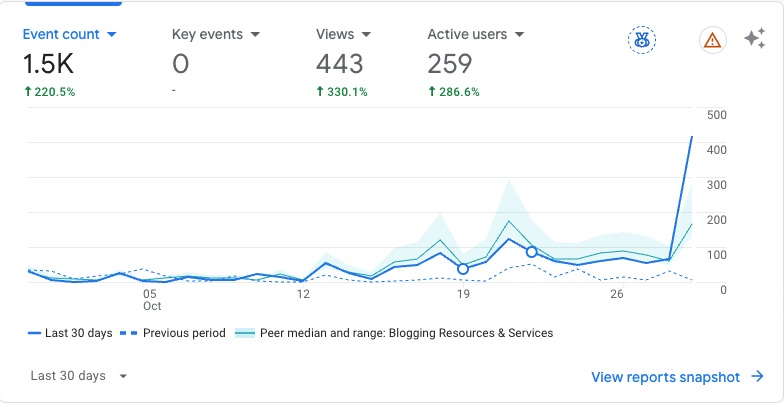
Website & Blog Performance
• 266 active users, with 257 being completely new to my content
• 460 total page views throughout the month
• 14-second average engagement time per active user
• Traffic peaks on October 19 and 26 – showing clear pattern opportunities
• First blog revenue milestone: $0.06 from my affiliate marketing post (full disclosure, this blog, as my personal blog, has never been monetized, so this is exciting for me since I have only monetized my affiliate partner’s businesses as their marketer!)
• 244 direct traffic sessions – 92% of all website traffic
YouTube Performance
17.3K views on Shorts in the 28-day period • 5.8K engaged views with 127 total likes • +6 new subscribers (though down 54% from the previous period) • Top performing video: “How to spot FAKE Louis Vuitton handbags” (346 views) • 84.1% discovery through Shorts feed • Challenge identified: 64.9% swipe-away rate on Shorts
The Insights That Changed Everything
The raw numbers were just the beginning. What mattered more were the patterns and insights that emerged from daily, manual analysis – insights I never would have discovered through automated reports.
- Numbers Don’t Lie (But They Can Hide): Without automation filtering and summarizing my data, I was forced to confront the real performance metrics daily. This daily confrontation with reality, rather than weekly or monthly summaries, changed how I made decisions in real-time. It also required me to stick to the plan and not my emotions.
- Consistency Builds Muscle Memory: The daily manual work created a deeper understanding of what actually works. By day 15, I could predict which pieces of content would perform well just by feeling the flow of creation.
- Patience is a Competitive Advantage: In a world of instant gratification, doing the slow work builds resilience that becomes a genuine competitive advantage. While others chase quick wins, sustained manual effort revealed sustainable growth patterns.
- Critical Thinking Over Quick Fixes: Manual analysis revealed patterns that AI tools would have missed. The human brain’s pattern recognition, when given consistent data exposure, picks up subtleties that algorithms overlook.
- The Human Element Matters: Authentic engagement and personal touch showed up clearly in the metrics. My direct traffic dominance (92% of sessions) proved that cross-platform personal branding was working better than any SEO strategy.
What Surprised Me Most
Several discoveries caught me completely off guard. The first blog revenue milestone, even though it was just six cents, felt monumental because I could trace exactly which manual optimizations led to that conversion. Seeing how direct traffic dominated my website visits was validation that my cross-platform strategy was working – people were actively seeking out my content rather than stumbling upon it.
Perhaps most surprising was my YouTube Shorts performance. Despite the high swipe-away rate (which initially felt discouraging), the 17.3K views and consistent discovery through the Shorts feed showed that my content was reaching the right audience – I just needed to work on the hook and retention strategy.
“The mental clarity that came from daily manual work was worth more than any efficiency gain I’d lost.”
But the biggest surprise was the mental clarity. By day 20, I found myself thinking about my business differently. I was making decisions based on patterns I had personally observed rather than assumptions I had inherited from industry best practices.
The Growth Mindset Shift
The challenge fundamentally changed how I approach business problems. My default question shifted from “How can I automate this?” to “What can I learn from this?” This might seem like a small change, but it represents a complete philosophical shift in how I run my company.
Instead of chasing vanity metrics that looked impressive on automated dashboards, I started understanding real engagement. Instead of optimizing for quick wins that would show up in next week’s report, I began building sustainable growth strategies that would compound over months.
Most importantly, I evolved from operating as someone who manages systems to thinking like a CEO who understands the business at a fundamental level. There’s a difference between knowing that your affiliate marketing post generated revenue and understanding exactly why that piece of content converted while others didn’t.
The Compound Effect of Doing Hard Things
By October 31st, I realized this challenge wasn’t just about consistency or even about understanding my business metrics better. It was about proving to myself that I could still do hard things when they mattered.
In our rush to optimize and automate, we sometimes optimize away the very experiences that build character and insight. This challenge reminded me that there’s irreplaceable value in the manual work, in the daily grind, in the patient observation of patterns over time.
The entrepreneur who can do both – who can automate strategically but also go manual when deep understanding is required – has a significant advantage over those who can only do one or the other.
Your Turn: The Challenge Continues
I’m not suggesting you abandon automation entirely. That would be as foolish as automating everything. But I am challenging you to identify one area of your business where automation might be preventing deeper understanding, and commit to 30 days of manual work in that area.
Maybe it’s your social media analytics. Maybe it’s your customer service interactions. Maybe it’s your content creation process. Whatever it is, give yourself the gift of manual work, daily observation, and the kind of deep pattern recognition that only comes from consistent human engagement with your business reality.
The insights waiting for you on the other side of that discomfort might just change how you run your business forever.
This challenge was just the beginning. Throughout November, I’ll be sharing how to scale these insights systematically while maintaining the deep understanding that manual work provides. Because the goal isn’t to stay manual forever – it’s to automate from a place of true comprehension rather than hopeful ignorance.